
Cross-Contamination 101: Why Every Home Kitchen Needs a Dual-Sided Board
Cross-contamination is the transfer of bacteria — most often Salmonella, Campylobacter or E. coli — from raw food to ready-to-eat food. It is responsible for a meaningful share of all foodborne illness cases worldwide. The single most common point of failure: using one cutting board for both.
Why a single board is the problem
A board used for raw chicken and then 'wiped clean' for salad greens carries enough live bacteria to make someone sick. Even a thorough soap-and-water wash between uses is not as reliable as simply never sharing surfaces in the first place.
Two boards or one dual-sided board?
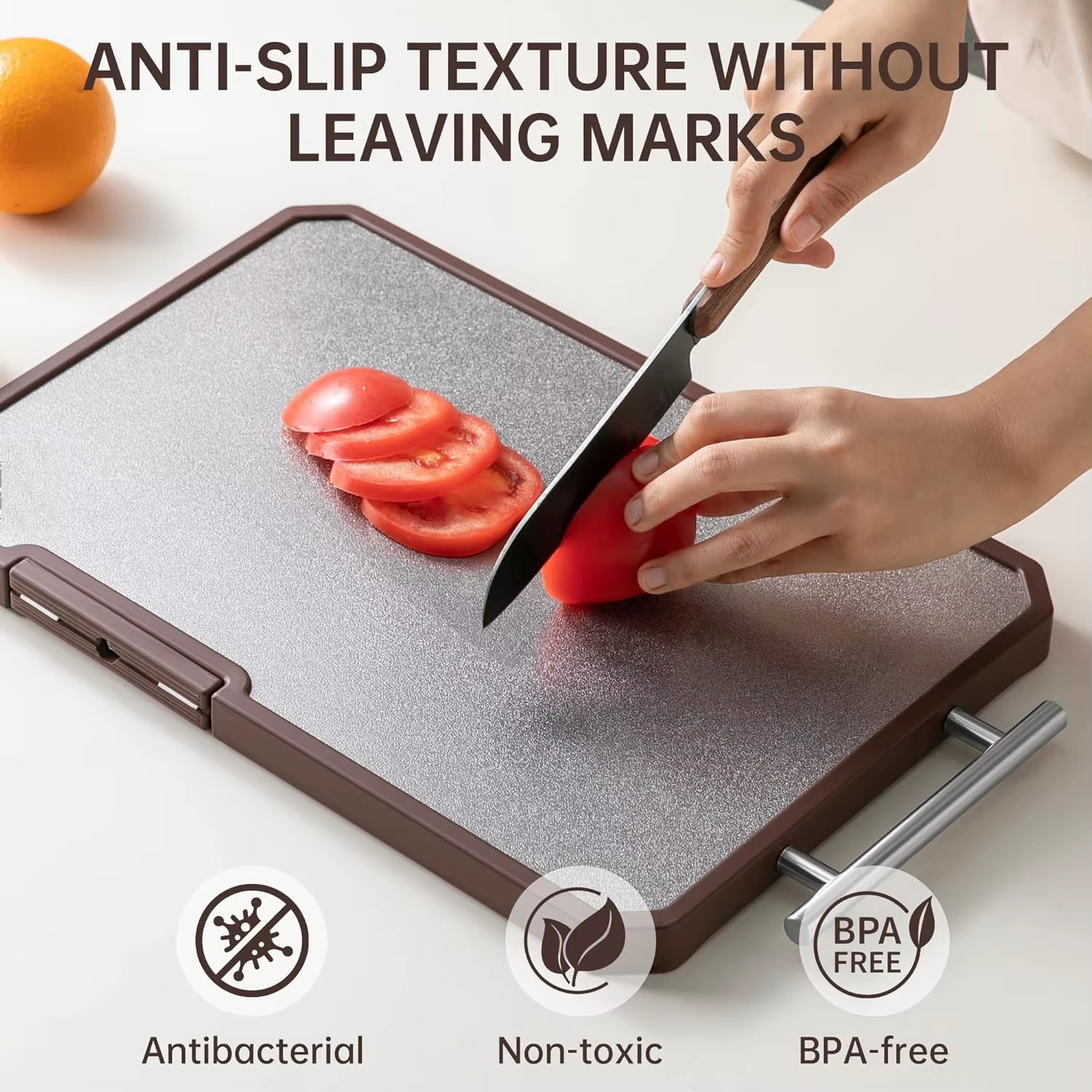
Both work. Two separate boards take twice the cupboard space and twice the budget. A dual-sided board with two clearly-different surfaces — metal or titanium for raw, wood for ready-to-eat — gives you the same separation in one storage footprint.
A simple rule that prevents 90% of incidents
Metal side = anything that needs to be cooked. Wood side = anything that does not. Never the other way around, ever.
Quick answers
What is cross-contamination?+
Cross-contamination is the transfer of harmful bacteria from one food, surface or utensil to another — most often from raw meat, poultry or seafood to ready-to-eat foods.
How do I prevent cross-contamination at home?+
Use separate cutting boards (or a dedicated side of a dual-sided board) for raw protein and ready-to-eat foods, wash hands between handling each, and sanitise surfaces after every raw-prep session.