
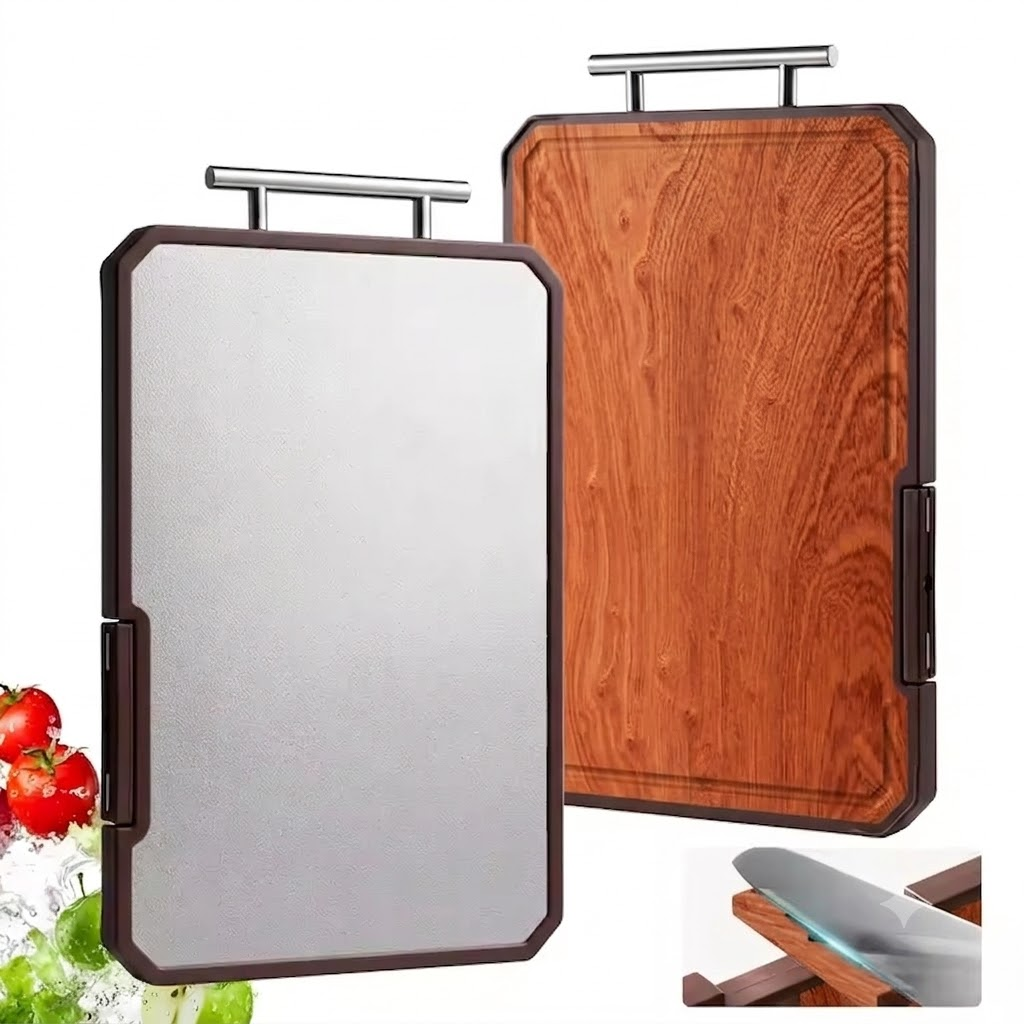
Titanium vs Stainless Steel Cutting Boards: Which One Is Right For You?
Kazomo's dual-sided cutting boards come in two metal-surface variants: a titanium-treated anti-scratch mesh, or a 304 food-grade stainless steel. Both pair with an acacia hardwood reverse. Both are excellent. Here is how to pick.
Titanium-treated mesh: knife-friendly hygiene
The titanium-treated side is a composite engineered to feel soft under the blade — almost wood-like — while being far more sanitary than plastic. Choose this variant if you chop heavily and want to extend the life of your knives.
304 stainless steel: the commercial-kitchen standard
The stainless variant uses the same 304 grade you find on restaurant prep tables. It is the most non-porous, stain-resistant, odour-proof surface money can buy. Choose this if you process a lot of fish, citrus, garlic and onions, or if you want a surface you can sanitise in seconds.
What they share
Same dimensions, same acacia hardwood reverse, same stainless steel handles and hinge, same ten-year build philosophy.
Quick answers
Does cutting on stainless steel dull a knife?+
It is harder than wood, so the edge needs honing more often, but it does not chip the blade. For everyday chopping, use the acacia side.
Is a titanium cutting board really anti-bacterial?+
The titanium-treated surface significantly reduces bacterial growth between cleanings, but proper washing is still required.